Thursday, November 29, 2007

As "attractive a small theater. . ."

Work concluded in March 1913; on the 15th of that month the Auditorium was opened with a Saturday afternoon matinĂ©e performance of “Modern Eve.” The daytime show was scheduled for the “benefit of our of town patrons,” with consideration also extended to the children of the community. The discounted fifty-cent seats in the balcony were reserved for children twelve years of age and under. The formal dedication of the auditorium occurred that evening with the presentation of “The Only Son.” Prior to the performance, Richland Center’s Mayor P. L. Lincoln addressed the audience and extended public thanks to the community, to the building committee and to the contractor. Within months of opening, the success of the auditorium required the city to expand the width of the sidewalk in front of the building to accommodate crowds congregating before and after performances; at that time the city also placed two ornamental electric light posts at each corner of the building.

Shortly following the completion of the auditorium, journalist Walter A. Dyer visited Richland Center and wrote a piece for the New York-based publication World’s Work. In the August 1915 issue Dyer shared his complimentary perceptions of Richland Center and provided a national audience with a glowing description of the community, which he said exemplified cooperative action and the spirit of the Middle West. Dyer’s article offered an excellent description of the features and the arrangement of spaces in the new auditorium. He commented that it was “as attractive a small theater, opera house, and lecture hall" as he had ever seen, and offered further that “its decorative beauty scarcely conceals its look of confident efficiency.” In his final analysis of the building he wrote,

The Richland Center Auditorium has undoubtedly contributed in a degree to the community spirit and democracy of the place, and it has given the leaders a confidence in social experimentation. It is a popular institution with no taint of philanthropy, and it is used by the people largely because they built it themselves.

(Photo courtesy of the Richland Center History Room)

Tuesday, October 16, 2007

Historic Street Scene, Richland Center, WI

A crowd gathered one summer evening over a half century ago outside the Municipal Building and Auditorium in the hills of Richland Center, WI. When it was built in 1913, it was the first City Hall in Wisconsin to include an entertainment venue managed by the city.

At the turn of the 20th century Richland Center was home to several womens groups who were dedicated to securing equal opportunities for themselves, in addition to providing community service. Collectively they lent impetus to the construction of a new city office building that also housed an auditorium, so that this rural community could enjoy theater, professional musical performances and political debate.

As a center of community activity for nearly a century, the building has provided a focal point to the business district and a place where city dwellers mingle with their rural neighbors and all share in entertainment and socializing.

(Photo courtesy of the Richland Center History Room)

Monday, July 09, 2007

Wisconsin Historical Society, c. 1900


A beautiful collection of photographs that were taken by Superintendent of Construction Francis Grant during the building of the Wisconsin Historical Society are part of the society's collection. They can be seen at its archives.

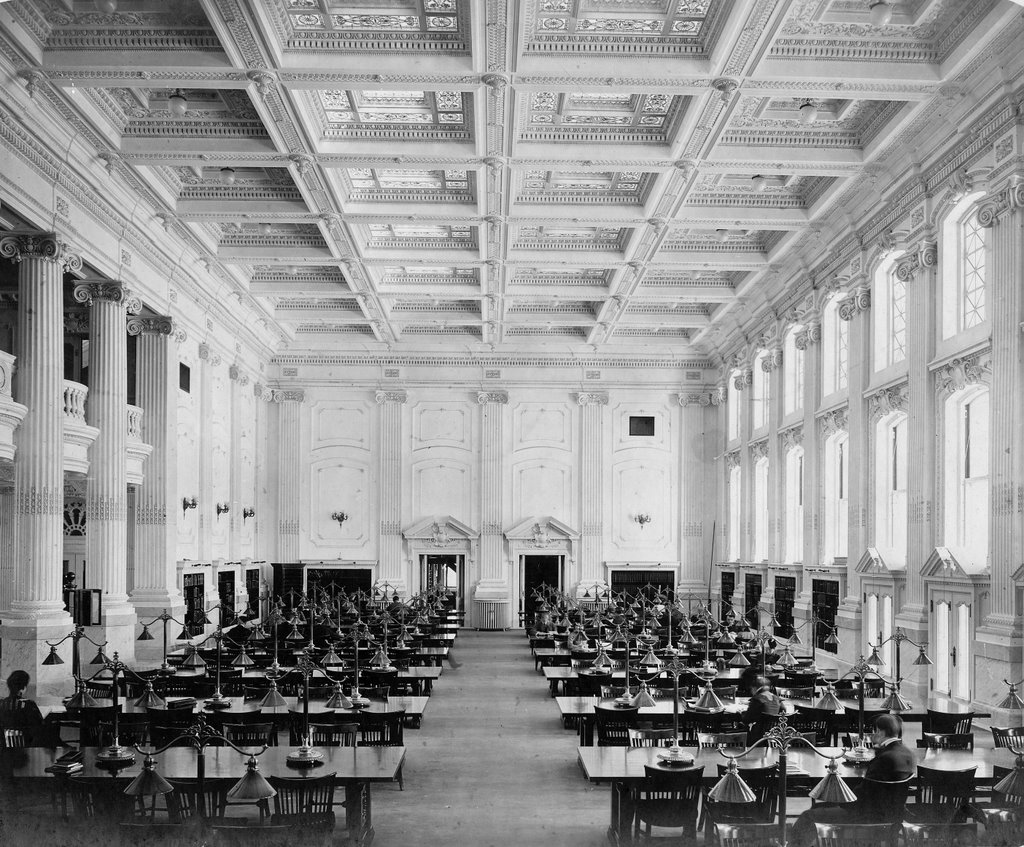
Wisconsin Historical Society Reading Room, 1954 Remodeling

Although the volume of the Reading Room was maintained, significant changes were implemented in the remodeling that took place in 1954. The Reading Room and circulation areas were painted, large areas of flooring were replaced, skylights and historic fixtures were removed and fluorescent lighting installed. The spaces contiguous to the Reading Room and its circulation area also were modified.

In the Reading Room a suspended ceiling was installed that concealed the original decorative ceiling and diffused new ambient illumination provided by fluorescent tubes. Furniture was moved. Most significantly a new circulation desk was built that spanned between the columns in the Reading Room; the card catalog was moved from the circulation area to assume a new prominence at the center of the Reading Room. In this location, it also served to divide the space into two discrete zones.

What had been conceived as a space with a single function, “reading,” was modified to perform as a multi-use space. The long tables were removed from the north side of the room, where smaller tables containing reference collections, conversation areas and newspaper reading stands were installed. While the older circulation desks remained in place the areas behind them, including the former delivery areas, became more fully dedicated to the use of staff.

(Photo Courtesy of the Wisconsin Historical Society)

Monday, May 21, 2007

Appleton celebrates the opening of Fox River Locks

The "7Cs" approached the filled chamber of Appleton Lock 2 on Saturday May 19th. The paddle wheeler arrived with community and state dignitaries aboard, along with members of the Navigational System Authority, to celebrate the reopening of the Appleton Locks. The occasion was marked by music, speeches and a great deal of applause for the accomplishment of the Navigational Authority in completing this phase of the work.

Thursday, March 22, 2007

"Cedars," Little Chute, WI

The next lock to be restored on the Lower Fox River is known simply as "Cedars." It is very near the site where in 1836 the Menominee Indian nation ceded approximately 4 million acres of land to the United States for about 17 cents an acre. The "Treaty of the Cedars" was the result of an amicable six-day meeting that reportedly was characterized by mutual respect and a sense of fairness. The agreement enabled the US government to begin developing the Lower Fox River to better facilitate trade and settlement. Within the next decade work was underway to create a system of locks and dams.

Sunshine and Shadows on Freshly Cleaned Stone

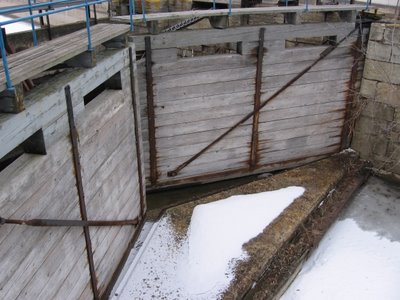
The masonry chambers of the locks that comprise the Lower Fox River navigational system are being tuck pointed and cleaned as part of their restoration. The railing and hand levers of the lower gate at Appleton Lock #2 cast a shadow across the freshly repaired stone wall. The shadow of the latticed spar that opens and closes the gates also is visible.

Appleton Lock #2

Aside from the completion of some site work, the restoration of Appleton Lock #2 has been completed. The stone chamber has been tuck pointed, the gates re-built using as much of the historic metal as possible and the valves and operating mechanisms have been fully refurbished and put back into good working order. The Appleton Locks will be in full operation within the next two months--once the ice fully melts and the canal is reflooded.

Monday, March 19, 2007

Survey and Documentation at the Wisconsin Historical Society


Jim Sewell, a Preservation Architect with the Wisconsin Historical Society, traveled the upper reaches of the Reading Room aboard the precarious-looking Genie to have a closer look at the panels that were installed in the 1950s to replace the historic decorative glass. When modifications were made to close the skylights on the roof and a floor was put in on the level directly above to create additional office space, a generous gap was left above the Reading Room ceiling. This may someday facilitate restoring the appearance of back lit decorative glass in the space.

Light as a Decorative Finish

For more than a century, a beautiful pattern of light occurred at the start of each sunny day on the wall opposite the windows in the east facade of the Reading Room.

Saturday, March 03, 2007

The Appleton Flats

Appleton Lock 3 is situated in the industrial area of Appleton long referred to as "the Flats." For years the community turned its back on the Fox River, largely due to this industrial association and the pollution that resulted from the river having been in service to manufacturing for over a century. With strategies now being implemented to clean the river and restore some of its recreational potential, the old factories and warehouses lining its banks are being rehabilitated as spaces for working, living and gathering. The restoration of the turn-of-the-century navigational features is a part of the river renaissance.

Friday, February 02, 2007

Obscured by Plexiglass

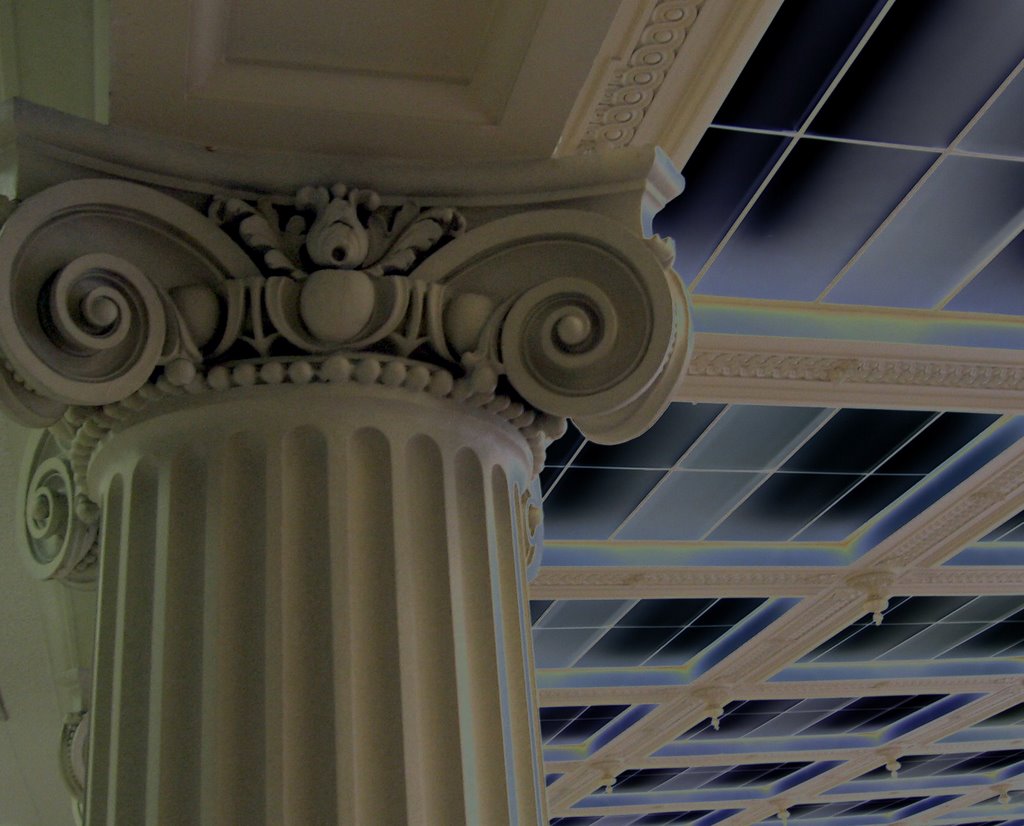
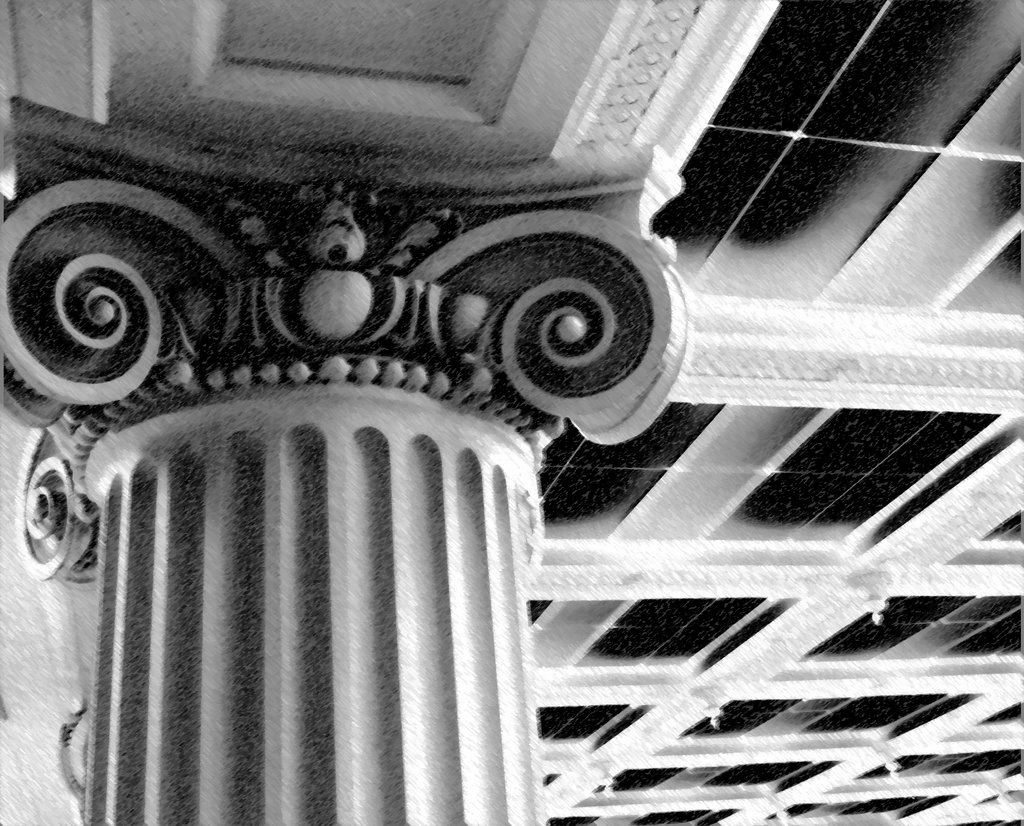
The decorative plaster elements in the ceiling coffers of the Wisconsin Historical Society Reading Room were exposed last week when the plexiglass panels that conceal fluorescent tubes were removed. Modifications made to Society Headquarters in the 1950s and 1960s that were intended to modernize the building have compromised the architectural integrity of spaces through out. However, the Reading Room has retained a good deal of its original historic fabric along with its monumental volume. Having been "tucked away" for fifty years may have spared these decorative elements from further alteration.

Thursday, February 01, 2007

Appleton Lock #4


Work is being completed on the first phase of the restoration of the Fox River Navigational system in Appleton. Above, two images from Appleton Lock 4 illustrate some of the repairs and improvements. A wood Lock Keepers shack was installed at the site, replacing a utilitarian metal structure from the 1970s or 1980s that had, in turn, replaced a wood shack that was similar to this replica. The design of the wood structure was based on historic prototype as revealed by old photographs and extant examples of the circa 1915 buildings that remained in place at Appleton Lock sites 2 and 3. The simple post light fixtures lining the edge of the chamber are based on a 1929 Corps of Engineers drawing for a nearly identical lamp that had illuminated this lock for at least five decades.

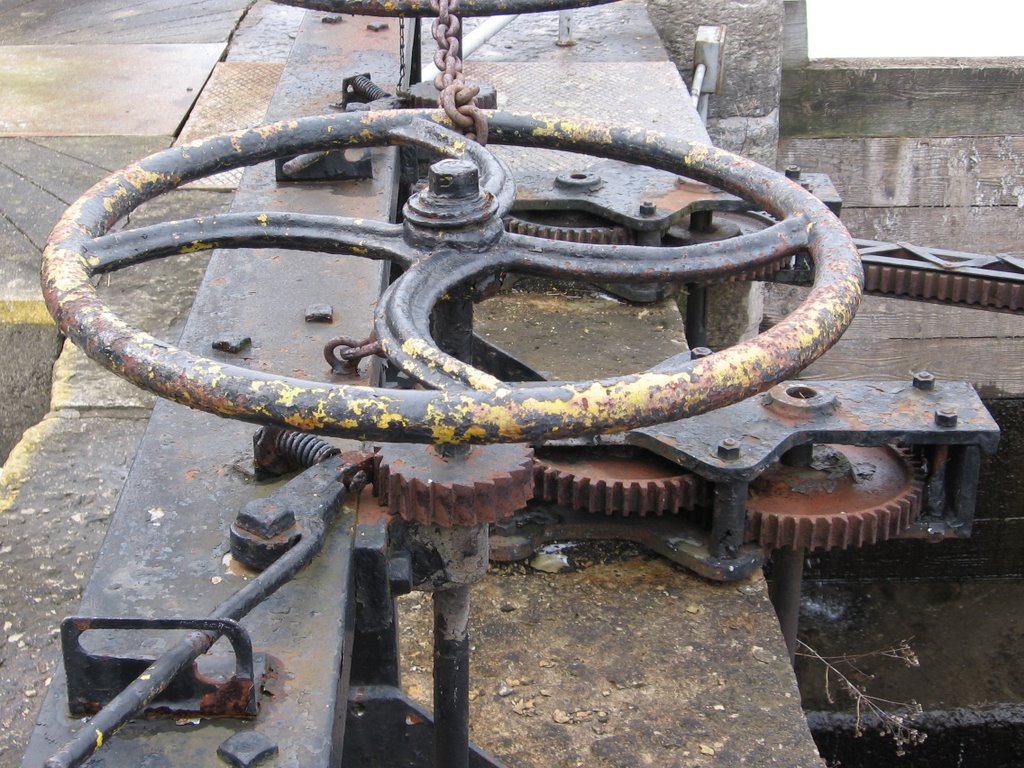
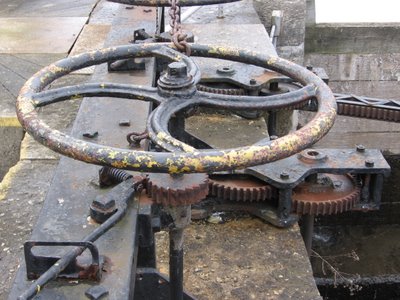
The lower photograph illustrates the refurbished metal flywheel and gears that are used to manipulate the gates that flood the chamber. The lattice spar that extends from the wall is attached to the gate and another hand-operated mechanism (not visible). A similar apparatus is attached to each of the four gates and is used to open and close them.

Thursday, December 21, 2006

Fox Locks Restoration Nears Milestone


A week ago the Appleton Post Crescent reported:

The Fox River Navigational System Authority is nearing completion on the first phase of restoring the river's 150-year-old lock system. Once Appleton's locks are completed this year, the restoration project will be one-third finished.

Officials with the authority and construction firm C.R. Meyer will hold an afternoon news conference and demonstration on Appleton's Lock Four today to mark their progress. Once complete, the locks will open navigation along the river from Lake Winnebago to Green Bay.

Harlan Kiesow, chief executive officer of the authority, said the historical significance of the locks is key to the project, and the ultimate impact of reopening the river will go far beyond fun on the water. "It's not just for boaters," he said. "This could open business opportunities to the waterfront like Trolley Square in Appleton, and could open other recreational possibilities."

The Appleton phase of the project began in April and cost $2.2 million. Each of Appleton's four locks will be completed within weeks. Lock Four beneath the College Avenue bridge is finished, and the remaining three locks in Appleton are close to done.

The authority will turn its attention to the locks in Little Chute next year, and restoration of the Kaukauna locks will take place in 2008. The Fox River locks system comprises 17 locks. The U.S. Army Corps of Engineers was once responsible for the operation and upkeep of the system. The corps closed 14 of the locks, leaving open those in De Pere, Lawrence and Menasha.

Appleton's locks haven't operated since 1982. The corps turned the lock system over to the navigational system authority, which is now responsible for restoration and future operation of the locks. Appleton's portion of the system restoration hasn't been without challenges. Water remained a difficulty even after canal drainage due to storm drains that empty into the canal, according to the authority. Reconstruction of mechanical gear also proved difficult as a key function of the project was maintaining the historical integrity of the locks.

Work done this year included replacement or repair of gear and valve systems on the four locks, construction of four replica lock tender houses, concrete repair and replacement of lock gates. The Appleton phase added more than four miles of navigable water to the area.Although Appleton's locks will be ready for use in a matter of weeks, they'll remain closed until 2008 because of upcoming work on the Lawe Street Bridge, Kiesow said.

Jim Collar, Appleton Post Crescent
December 15, 2006
Tuesday, December 19, 2006

Hymn to the Wisconsin Historical Society Library

So shall this sacred temple stand
the treasures of a noble state;
And all the good Thy wisdom planned,
Man's labor into life translate.

Hymn prepared for the October 19, 1900 dedication of the
Wisconsin State Historical Library (Final stanza),
by Mary M. Adams

Tuesday, November 21, 2006

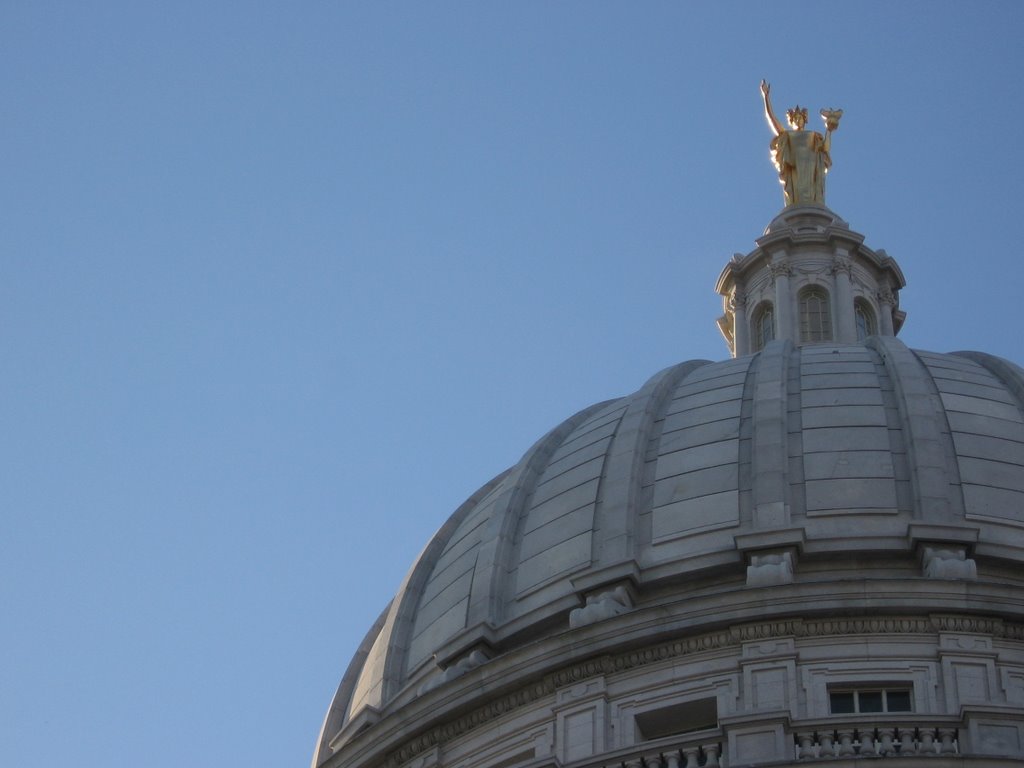
Gilded Lady atop the Granite Dome

The Wisconsin State Capitol was one of the last major Beaux Arts-inspired structures erected in the United States. New York architect George Post’s capitol epitomized the grandeur of an American architecture that was slipping into the past, even as the building was being completed.

The construction of the exterior culminated in the summer of 1914 with the placement of Daniel Chester French’s great gilded figure "Wisconsin." On July 20th thousands of spectators watched as the three-ton statue was hoisted by derricks approximately 270 feet to the top of the massive granite dome. "Wisconsin" stands at a height of 15’-5” and holds her right arm outstretched, gesturing with an open hand towards Lake Monona. In her left hand she holds an orb atop which an eagle spreads its wings. The cape that covers her classical robe is fastened in front with an ornamental breastplate that bears an elaborate "W" while her headdress incorporates elements that symbolize the attributes of the state. Abundance and agriculture are represented by ears of corn and decorative flowers, while the state animal, the badger, peers over her forehead from the crown of her headpiece.

Cast in six sections, the hollow bronze figure is positioned on a convex base inscribed "D.C. French, Sc. 1912;" "Cast by Roman Bronze Foundry, N.Y.”

Saturday, October 28, 2006

The Preservation Resource Center of New Orleans (PRCNO)

Cornerstone Preservation participated in the PRCNO’s “Operation Comeback” as one of many firms that donated services to aid in the reconstruction of the storm and flood damaged neighborhoods of New Orleans. The Resource Center, which has been in operation since 1974, has shifted its preservation advocacy programs into overtime in the aftermath of Hurricane Katrina. In addition to coordinating pro-bono meetings between property owners and preservation professionals from across the country, the PRCNO also purchases and restores run down and abandoned properties in an effort to revitalize New Orleans historic neighborhoods. Visit PRCNO’s website to learn more about the great work of its dedicated staff and how you can help.

Thursday, October 19, 2006

An Urban Survivor


Ray’s neighborhood was empty when we arrived. There was little sign of life and even less of the rebuilding and healing that the nation would like to believe is taking place in the historic districts of New Orleans. Ray told us that within his city, the blighted areas seem to remain “out of sight and out of mind” to far too many. Several of his neighbors had abandoned their properties and have not returned to help him breath life back into this once proud neighborhood.

Ray just turned forty-five and never has lived anywhere but the Holy Cross district. As he recounted stories of better days, he spoke of community and friendship, of the small businesses that once thrived in the neighborhood and their colorful proprietors. His younger middle-aged brother was quiet and remained in the shadows as we conducted our evaluation of his family’s two residences in the neighborhood. As he looked inward and remembered, tears welled in his eyes.

The brothers are committed to repairing their homes and rebuilding their lives. They clearly are overwhelmed and, by their account, there is little help. They were touched by the attention we extended to them in conducting an evaluation of their properties and thanked us in advance for the promised inventory that would itemize damage and make recommendations for the work that needed to be done.

What needs to be done is far more than Ray and his brother will be able to accomplish alone. Yet, each day they set to their work and continue to hope that some manner of help is on its way (despite the year that has passed since tragedy changed the very fabric of their lives) and remain optimistic that others will follow in rebuilding the nearby abandoned residences. Their passion for the past and normalcy that once characterized their lives is palpable. Every step they take appears to be a step towards attaining the goal of re-establishing the life they once knew.

Tuesday, October 10, 2006

19th Century Lower Fox River Locks


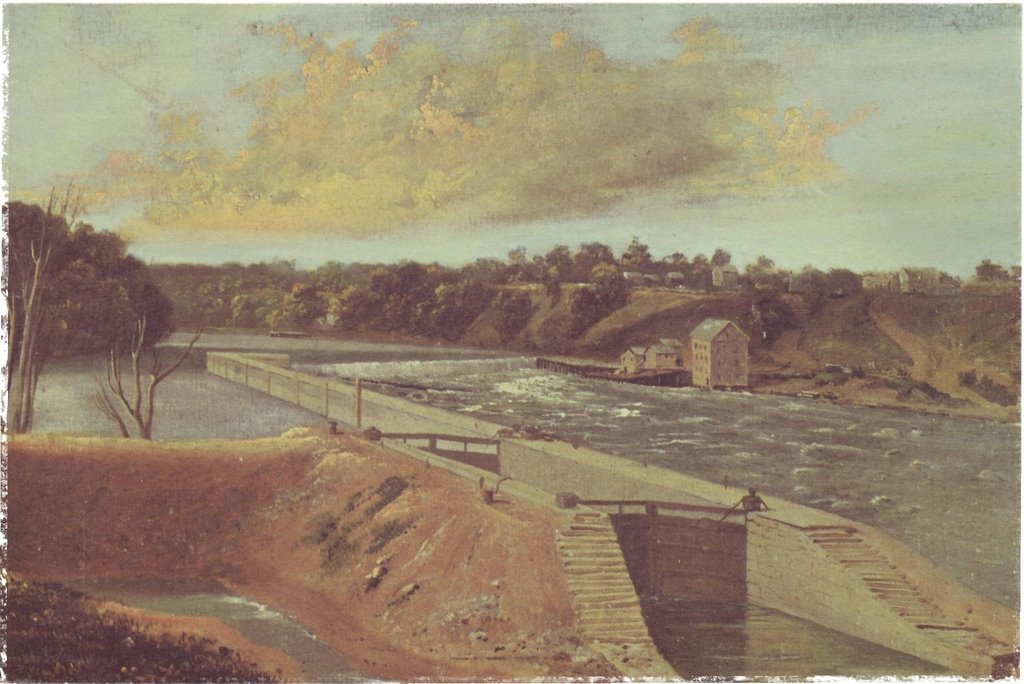
In 1866 with control of the Lower Fox River transferred to the Green Bay and Mississippi Canal Company, the federal government sent Major Charles Sutter to survey the canal system and make recommendations for its improvement. Major Sutter reported on the fully completed canal, two dams and four locks in the Grand Chute area (now Appleton), offering that the lower dam was water-tight and in good condition, but that some settling and seepage was taking place at the upper dam. He described the first three locks as positioned along a 3,600 foot canal bypassing the upper dam. According to Major Sutter all three locks required new planking and gates; the fourth lock, on a separate 1,267 foot canal bypassing the lower dam, was observed as being in good condition although replacement gates were recommended.

Four years later, the United States government took over the Lower Fox waterway, including the Grand Chute locks, and in 1872 the system were placed in the care of Major D.C. Houston of the Corps of Engineers. Following his survey of the man-made elements, he reported to Congress on the condition of the waterway. Concerning the features in Appleton, he indicated that they generally were in poor condition, noting that the upper dam required new gravel each season to keep it tight. Of the locks, he observed all in need of remedial attention that included replanking beneath the water line and found Lock 2 in the worst condition, with its south wall threatening to collapse.